
 By
By 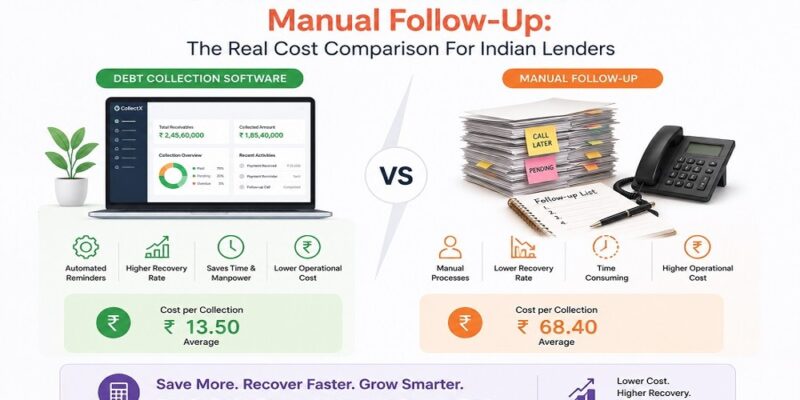
The lending system in India has grown to immense proportions in the last decade. The number of loan accounts outstanding has increased rapidly from NBFCs in tier-2 cities to digital-first fintech lenders in multiple states, and manual recovery teams are not able to catch up. Lenders face an increasing need to collect dues faster, remain RBI-compliant, and reduce operational costs – and this has compelled them to take a second look at their collections model.
One simple question that remains at the heart of this debate is whether or not debt collection software is worthwhile or if the tried-and-true field agent + phone call method still works.
This article dissects the actual figures – and the outcome might not be what you expected to hear from finance leaders who remain fence-sitters.
The Hidden Costs Of Manual Follow-Up
The number of collection agents in a mid-sized NBFC with 50,000 loan accounts is about 80 to 120 members, each of whom is responsible for 400 to 600 accounts. When you add in salaries, travel allowance, mobile allowances and overheads for the supervisor it goes beyond ₹40-60 lakhs a month, not to mention attrition. On the other hand, agent turnover in India is often in the range of 30 – 45 percent per year, resulting in frequent costs of agent onboarding and training every few months.
Beyond salaries, manual processes carry a serious data problem. Agents working off spreadsheets or disconnected CRMs frequently duplicate calls, miss follow-up windows, or fail to log outcomes accurately. Poor data hygiene leads to skipped accounts, escalated delinquencies, and frustrated borrowers who receive three calls on the same day and none the week after. This inconsistency directly drags down recovery rates – which for manual-only operations in India typically hover between 55 and 65 percent on early-bucket NPAs.
Regulatory exposure adds another layer of cost. The RBI’s Fair Practices Code and guidelines on harassment prevention demand documented, time-stamped communication records. Manual operations struggle to produce this paper trail on demand, leaving lenders exposed during audits.
What Debt Collection Software Actually Changes
Modern debt collection software does not simply automate phone calls. The better platforms built for Indian lenders integrate omnichannel outreach – SMS, WhatsApp, IVR, email, and agent-assisted calls – into a single workflow that runs on loan management data in real time.
The operational shift is significant. A lender using debt collection software can configure bucket-wise strategies: soft digital nudges for DPD 1-15, escalating IVR campaigns for DPD 15-30, and agent-priority queues for harder buckets. Agents no longer dial blindly – they receive daily worklists ranked by recovery probability, contact time preferences, and borrower behavior patterns.
Recovery rates on early-bucket delinquencies routinely improve by 18 to 28 percentage points when lenders implement structured debt collection software with proper configuration. For a lender with ₹500 crore in outstanding early-stage NPAs, that improvement translates to tens of crores recovered that would otherwise have aged into write-offs.
The compliance benefit is equally material. Every communication – automated or agent-driven – is timestamped, recorded, and audit-ready. This matters enormously under RBI’s digital lending guidelines, where documentation gaps carry regulatory and reputational consequences.
Conclusion
The conversation around debt collection software in India is no longer about whether technology can replace human judgment – it cannot, and the best platforms do not attempt to. The real argument is about where human effort is best deployed. When agents spend their working hours on high-priority, relationship-sensitive cases rather than routine first-contact calls, recovery outcomes improve and borrower experience holds up.
For Indian lenders facing margin pressure, regulatory scrutiny, and rising NPA concerns, the cost comparison is clear. Manual follow-up is not cheap – it simply hides its costs in attrition, poor recovery rates, and compliance gaps. Debt collection software, when properly implemented, brings those costs into the open and systematically eliminates them.
The lenders who adopt this shift now will build collection operations that scale – and the ones who delay will keep paying for the inefficiency of the alternative.










Comments